

History
The Bill of Rights was not initially in the Constitution, but Anti-Federalists thought that more individual rights needed to be stated so that way they could not be taken away. Before America gained its independence, British subjects enjoyed an English Bill of Rights, but many colonists in America felt these were abused during the Revolution, in addition to Parliament maintaining extremely high taxes that were debilitating. Once independence was achieved and we adopted our own Constitution, the Bill of Rights was a security measure for Anti-Federalists who feared we would repeat those abuses and thus wanted a guarantee that this did not happen again. Among notable Anti-Federalists were Patrick Henry, George Mason, and James Monroe. Here is a simplified outline of your rights from the Bill of Rights.
First Amendment
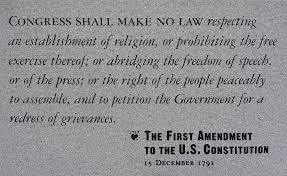
- Religion: Congress can not make any law that favors one religion over another. They also can not stop you from practicing any religion,
- Speech: The government can not restrict your speech,
- Press: The government can not prevent newspapers, magazines, books, radio, or any other type of press from stating opinions,
- Protest: The government can not stop you from protesting peacefully.
Second Amendment
The Second Amendment states that people have the right to carry a weapon. However, this does not mean that anyone can buy a weapon. Laws vary by state, but to buy a weapon, there is usually a process that has to be followed.
Third Amendment
The Third Amendment, which is not commonly applicable anymore, states that people are not forced to let soldiers live in their houses unless there is an active war.
Fourth Amendment
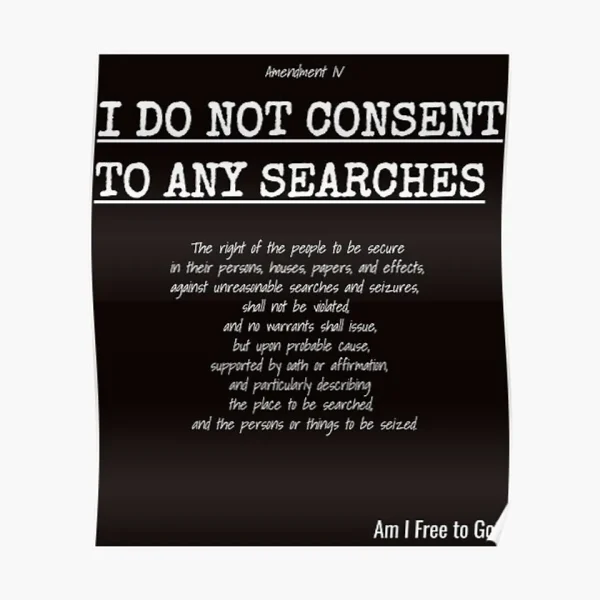
The Fourth Amendment states that nobody can search your person, house, or any of your belongings without a warrant or a reasonable suspicion that there is an illegal activity occurring or that there could be possible harm occurring to others.
Fifth Amendment
The Fifth Amendment states that:
- If you are tried in court for a serious crime, you are entitled to a jury,
- If you are found innocent of a crime, the government can not try you again for the same crime,
- You can not be forced to admit to a crime (this refers to the common statement, “I plead the fifth”),
- You can not be excessively punished unless you are convicted of a crime by a jury (killed, put in jail, or fined),
- The government can not take your house or property unless the government pays for it at a fair price.
Sixth Amendment
The Sixth Amendment states that if you are arrested and charged with a crime, you have the right to:
- A public and speedy trial,
- The case is decided by a jury or people from where you are,
- You have the right to know what you are accused of and hear the cross-examination, “The formal interrogation of a witness called by the other party in a court of law to challenge or extend testimony already given” (Oxford Languages), of others,
- You have the right to a lawyer, and if you can’t afford one, the government is responsible for providing one to you.
Seventh Amendment
The Seventh Amendment states that you have the right to a jury in a civil case. “Civil cases are legal cases involving disputes between individuals or organizations in which some form of compensation may be awarded” (Nineteenth Judicial Circuit Court Lake County, Illinois).
Eighth Amendment
The Eighth Amendment states that the government can not make you pay more than you can afford to pay for bail. Furthermore, the government can not inflict cruel or unusual punishments.

Ninth Amendment
The Ninth Amendment states that just because these rights are stated in the Constitution does not mean that these are our only rights. This means we still have rights not stated in the Constitution.
Tenth Amendment
The Tenth Amendment states that anything the Constitution does not give explicitly to the national government is left up to the states to determine. This means that any laws not specifically stated in the Constitution are left up to the states; however, federal law will always precede state law.




 Student Standard Press
Leave a comment